
Financial Therapy for Couples in Greensboro, NC
Most money arguments are about more than money.
What Is Financial Therapy for Couples?
Money is one of the most common topics couples argue about. But most financial arguments are not really about money. They are about security, trust, control, values, and fears that both partners carry into the relationship. Financial therapy for couples addresses the emotional side of those conflicts, not just the account balances.
Partners almost always bring different financial histories into a relationship. Different experiences with scarcity or abundance, different beliefs about spending and saving, different levels of financial anxiety. Those differences do not disappear on their own. They either get worked through or they create patterns that erode trust and connection over time.
Couples financial therapy at A Path to Wellness focuses on improving communication, reducing financial conflict, and helping partners understand each other's relationship with money. The work is both relational and emotional.
| Feature | Traditional Financial Planning | Traditional Talk Therapy | Financial Therapy |
|---|---|---|---|
| Focus | Assets & Growth | Emotional Wellbeing | The Intersection of Both |
| Primary Goal | Maximizing Net Worth | Mental Health | Financial Harmony & Behavioral Change |
| Addressing Trauma | Rarely | Yes | Yes (Specifically Money Trauma) |
| Conflict Resolution | No | General | Specific to Financial Disputes |
A Certified Financial Therapist bridges the gap between emotional wellness and practical financial behavior, integrating both into a single therapeutic approach.
Common Financial Challenges Couples Face
Financial stress affects emotional connection, communication, intimacy, and trust. The concerns couples bring to financial therapy are wide-ranging, but most have both a practical and an emotional layer worth addressing.
Financial Conflict and Trust in Relationships
Financial arguments often turn into battles about winning rather than understanding. When the same money fights keep happening, it usually means the emotional undercurrents have not been addressed. Therapy helps couples identify those patterns and develop communication that actually moves things forward.
Financial secrecy, hidden debt, undisclosed spending, or financial dishonesty can damage a relationship as deeply as other forms of betrayal. Rebuilding trust after financial infidelity requires both emotional repair and practical changes to how partners communicate about money going forward.
How Past Experiences Shape Financial Behavior in Relationships
Every person enters a relationship with a financial history. Some grew up in households where money was tight and discussing it was taboo. Others grew up with a sense of financial stability that their partner never had. Those backgrounds shape how each person experiences money decisions in the relationship, often in ways neither partner fully recognizes.
When a partner reacts with anxiety to a purchase, or shuts down during financial conversations, that response is usually rooted in something older than the current relationship. Exploring those histories in therapy often reduces the judgment and blame that come with financial disagreements. When partners understand where each other is coming from, the conversation can shift from conflict to collaboration.
- Childhood money experiences and their ongoing influence
- Scarcity and abundance mindsets each partner carries
- Family financial patterns passed across generations
- Emotional triggers around spending or saving decisions
- Different definitions of financial security and success
- Reducing financial judgment between partners

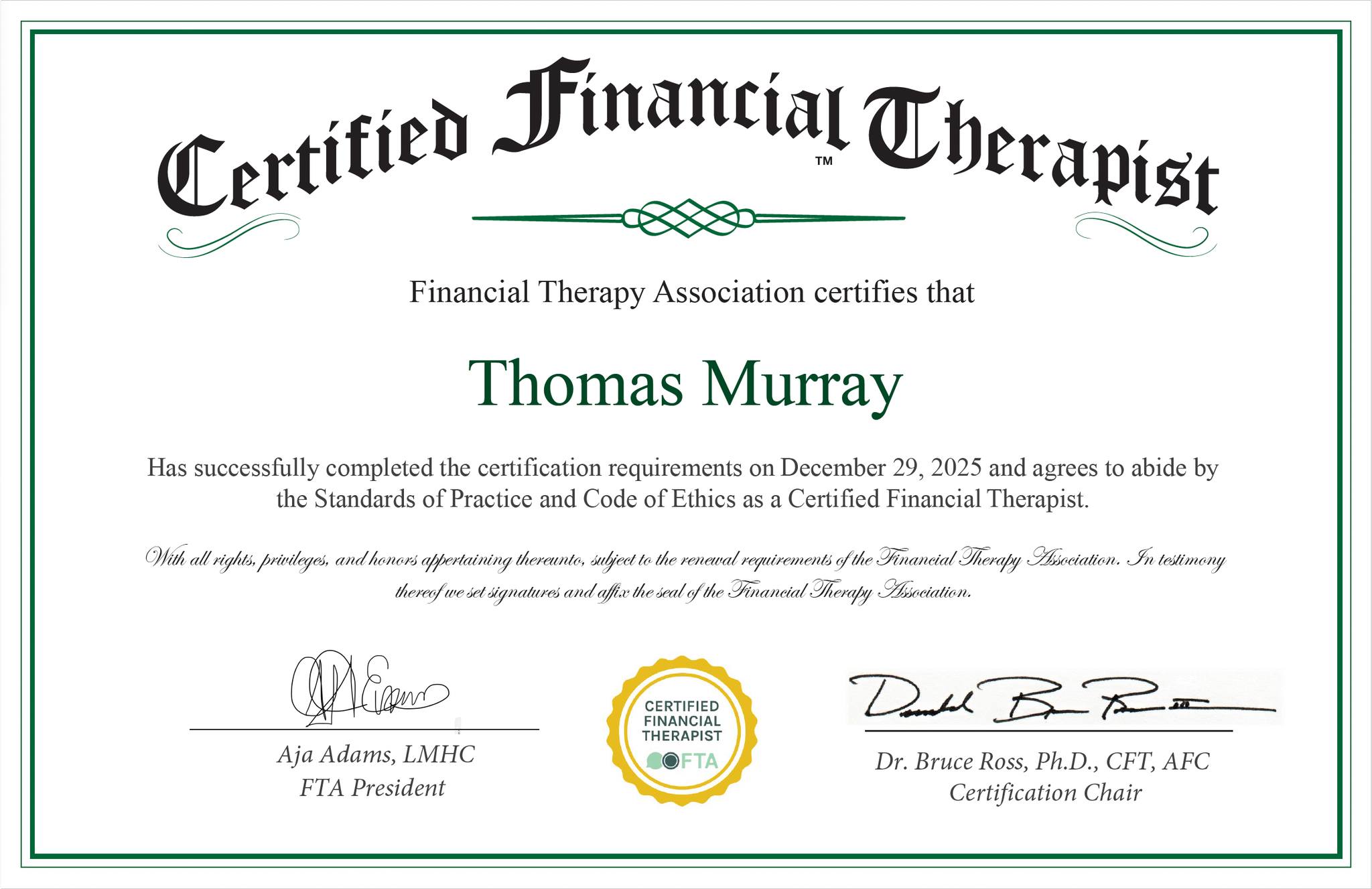
Meet Dr. Tom Murray, CFT™
Dr. Tom Murray is a licensed therapist, practice owner, and Certified Financial Therapist based in Greensboro, NC. He works with couples navigating financial conflict, communication difficulties, financial infidelity, and the emotional patterns that drive money-related stress in relationships. His clinical background in couples therapy, combined with his MBA and CFT designation, positions him to address both the relational dynamics and the behavioral underpinnings of financial stress in partnerships.
“As many of you know, I was a welfare-baby. Money felt tight, stressful, and full of limits. Those early lessons shaped how I saw money, success, and what felt possible.
Over time, I learned that changing income matters less than changing mindset. Learning how money works, how wealth grows, and how to set clear goals changed my life. That shift led me to business ownership, helping others with money stress, and earning my MBA.
I have now completed the requirements for the Certified Financial Therapist designation. This work blends psychology, behavior, and practical money skills. It fits naturally with how I already help individuals, couples, and families.
I am grateful for the training and standards set by the Financial Therapy Association. This step deepens my ability to help people reduce money stress and build healthier lives.”
Virtual sessions available. Dr. Murray provides virtual financial therapy for couples in North Carolina, Pennsylvania, Oregon, and Florida.
Virtual Financial Therapy for Couples
Scheduling couples therapy can be complicated when two people have different work schedules, family responsibilities, or one partner travels frequently. Virtual sessions reduce that logistical friction. Both partners can attend from the same location or from separate ones if that is easier.
The quality of the therapeutic work does not change because it happens online. For couples already managing significant stress, removing scheduling barriers makes it more realistic to actually follow through.
- Attend together from home or from separate locations
- Reduce scheduling conflicts between partners
- Continue sessions consistently during stressful periods
- Access specialized support without travel logistics
- Evening and flexible appointment times available

Working Through Financial Stress on Your Own?
If financial stress is affecting you individually, whether through anxiety, spending patterns, or deeper emotional associations with money, individual financial therapy offers focused support for your relationship with money separate from your relationship with your partner.
Frequently Asked Questions
What is financial therapy for couples?
How is couples financial therapy different from regular couples counseling?
What is financial infidelity?
Do both partners need to attend sessions?
Can financial therapy help if we are heading toward separation or divorce?
Do you offer virtual financial therapy for couples?
Reduce the Financial Conflict and Start Communicating Better
Confidential · Judgment-Free · HIPAA-SecureFrom Our Blog
Hot Topics
Real insights from our therapists on relationships, mental health, and the conversations most people are afraid to start.

Discernment Counseling for Couples on the Brink of Divorce
If you're unsure whether to stay or go, discernment counseling offers a structured, pressure-free path to clarity — without prematurely committing to either outcome.
Read More
Psychotherapy: Safe Haven for Emotional Healing and Development
Therapy isn't just for crisis. Discover how psychotherapy creates a safe, evidence-based space for healing anxiety, depression, trauma, and the challenges of everyday life.
Read More
Couples Counseling — From Conflicts to Connections
Conflict isn't the enemy of a strong relationship — how you handle it is. Learn how couples counseling helps partners move from recurring arguments to lasting connection.
Read More
Guided Growth: A Therapist's Guide To Post-Argument Reflection
What happens after the fight matters as much as the fight itself. A therapist's guide to processing conflict, repairing connection, and growing closer through disagreement.
Read More